Energy / Grid
The elements behind energy and grid infrastructure.
The grid depends on a concentrated set of strategic elements across transmission, transformers, battery storage, solar generation, power electronics, and resilient backup systems.
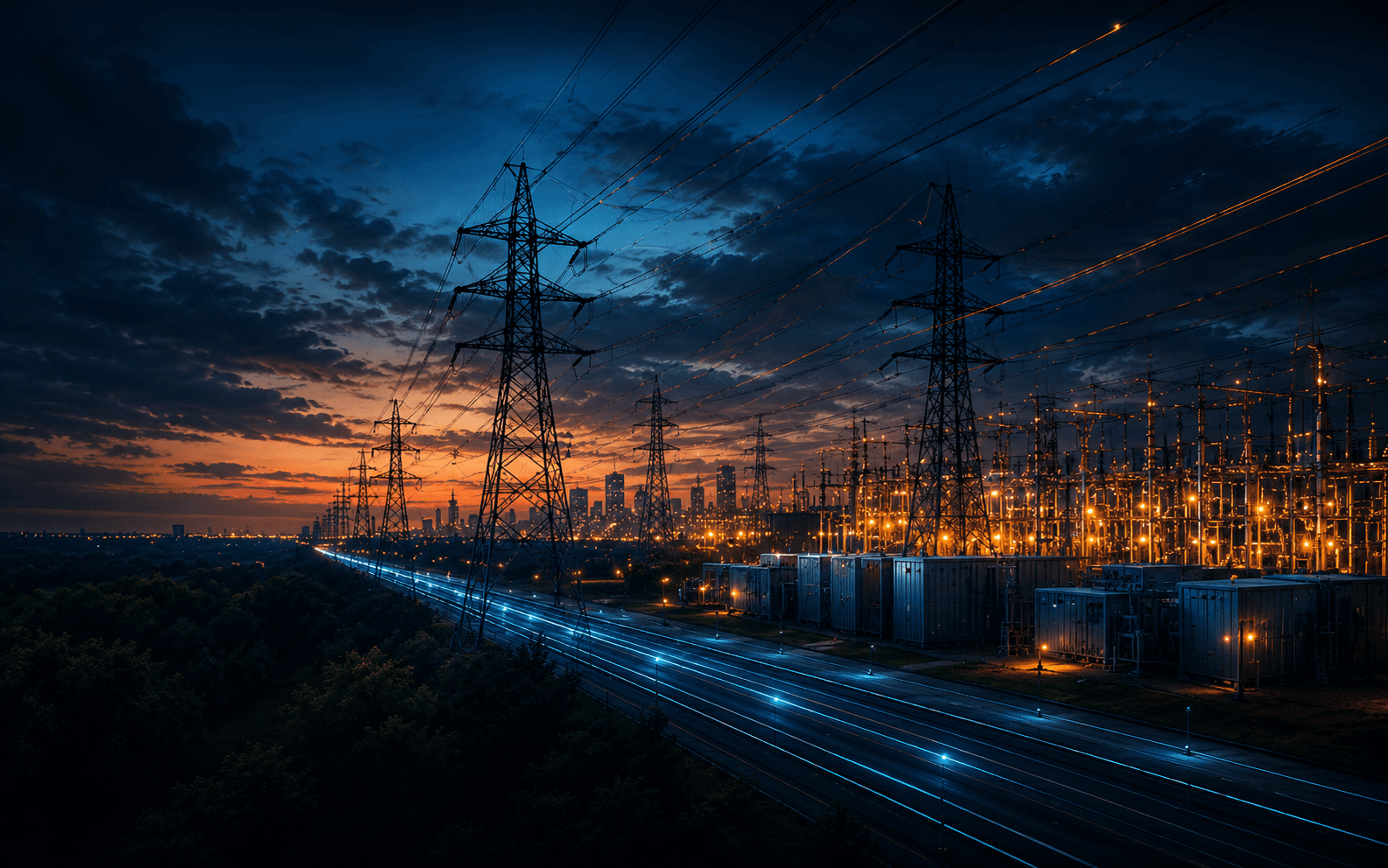
Grid Metals
6
Transmission, storage, solar
Bottleneck Risk
High
Lithium & cobalt refining
Substitution Risk
High
Copper hard to replace
Demand Trend
Rising
Electrification & storage
Element exposure essential to energy infrastructure
Core and supporting elements across transmission, transformers, storage, solar generation, power electronics, and backup systems.
Where these elements are used
Energy and grid infrastructure depends on specialized materials across transmission, transformers, storage, solar, power electronics, and resilience.
Transmission & Distribution
Conductors, substations, wiring, and grid build-out
Transformers & Substations
Windings, electrical steel, contacts, and arc control
Battery Storage
Grid-scale storage and backup power systems
Solar Generation
PV modules, frames, and advanced cell materials
Power Electronics
Switching, inverters, conversion, and capacitors
Backup & Resilience
Microgrids, UPS, and emergency power systems
Supply chain risk at a glance
Grid systems rely on materials with concentrated mining, refining, processing, or high-performance component supply chains.
Risk concentration
Concentration of mining and processing for key grid materials such as lithium, cobalt, and copper.
Top supply concentration by element
Key dependencies summary
The grid depends on materials where conductivity, storage chemistry, conversion, and supply access matter at the same time.
Physical Grid Backbone
Transmission lines, distribution systems, wiring, and substations rely on copper and aluminum.
Conversion & Control
Inverters, power electronics, capacitors, and switching depend on silicon, gallium, and tantalum.
Storage & Resilience
Batteries, backup power, and microgrids depend on lithium, nickel, cobalt, and manganese.
Generation Interface
Solar panels, module frames, and advanced photovoltaic materials depend on silicon and aluminum.
Material Dependency Evidence
Energy / Grid
Reviewed Pro evidence summaries behind this industry’s material exposure, supply-chain risk, and substitution difficulty.
Pro evidence summaries help explain how reviewed public-safe context supports industry dependency intelligence.
Dependency evidence
See how reviewed context supports material dependency signals.
Supply exposure context
Understand concentration, processing, and policy exposure behind industry risk.
Substitution and resilience
Review where replacement options are limited, costly, or operationally constrained.
This view does not expose scoring formulas, source-to-score mapping, reviewer notes, or internal source architecture.
Evidence summaries support interpretation, not official ratings.
Energy / Grid intelligence brief
Grid infrastructure ties together transmission, transformers, storage, solar generation, and power electronics. These elements are difficult to substitute because conductivity, storage chemistry, and conversion performance are constrained by physics — and demand is rising with electrification. Periodic Engine organizes these dependencies into a structured view of material exposure and strategic supply risk.
Modeled intelligence scores. Not financial advice. Not procurement guidance. Not investment recommendations.