China
Country ProfileChina is modeled as a major strategic materials node across processing, refining, industrial scale, and policy exposure for selected critical materials and downstream industries.
Supply & Production
China’s modeled role across selected strategic materials, supply-chain stages, and downstream production pathways.
Modeled public-preview assessment. Not official production shares or government ratings.
Strongest modeled role
Processing & Refining
China’s most important modeled role is concentrated in post-mining stages where raw or intermediate materials are converted into industrial inputs.
Most exposed materials
Rare Earths, Graphite, Gallium, Germanium
Selected materials show elevated exposure where processing, refining, separation, or export-policy sensitivity matters.
Key supply-chain concern
Stage concentration
Dependency risk increases when production is globally diversified but processing or refining remains concentrated.
Public preview boundary
High-level context only
Detailed facility-level, company-level, and trade-flow evidence remains reserved for briefing and Pro workflows.
Supply-chain stage map
A country’s role can change by stage. This view separates upstream production from processing, refining, manufacturing, logistics, and policy exposure.
Mining
Selective / material-specific
China’s upstream mining role varies by material. For some selected materials, the more important exposure is the downstream processing path.
Processing
Very High
Processing is a central stage of China’s modeled material influence. This is where raw or intermediate inputs become usable industrial materials.
Refining
Very High
Refining exposure matters because downstream industries often depend on material quality, purity, and reliable conversion capacity.
Separation
High
For selected material groups, especially rare earth-related supply chains, separation capability can be as strategically important as extraction.
Manufacturing
High
China’s industrial base links materials to downstream components, energy systems, electronics, batteries, and advanced manufacturing.
Logistics
Medium High
Logistics exposure includes ports, routing, industrial clusters, export channels, and the physical movement of materials through the supply chain.
Policy Control
High
Policy exposure includes export controls, licensing rules, industrial policy, permitting, and restrictions that may affect material availability.
Material-by-stage exposure matrix
Selected strategic materials mapped against the stages where China’s modeled influence is strongest.
| Material | Mining | Processing | Refining | Separation | Manufacturing | Policy Control |
|---|---|---|---|---|---|---|
| Rare Earths | High | Very High | Very High | Very High | High | High |
| Graphite | High | Very High | High | Selective | High | Medium High |
| Gallium | Medium | Very High | Very High | Selective | High | High |
| Germanium | Medium | High | High | Selective | Medium High | High |
| Magnesium | Medium High | High | High | Selective | High | Medium |
| Tungsten | High | High | High | Selective | Medium High | Medium High |
These are modeled public-preview exposure labels, not official production shares. Detailed source-linked evidence remains part of Pro and briefing workflows.
Processing and refining concentration
The most important country exposure often appears after mining, where materials are processed, refined, separated, or upgraded for industrial use.
Why this matters
Mining tells only part of the story. A material can be extracted in one country, processed in another, refined somewhere else, and then embedded into a component or industrial system.
For selected strategic materials, the most strategically important stage is often not extraction itself but where material availability becomes industrial capability.
Concentration signals
- Stage concentration — Processing or refining capacity may be more strategically important than raw extraction.
- Industrial clustering — Material conversion capacity often sits near downstream manufacturing ecosystems.
- Export-policy exposure — Materials with licensing, restriction, or dual-use sensitivity require policy-aware monitoring.
- Substitution drag — Even when substitutes exist, qualification, performance, purity, and redesign timelines may slow replacement.
Strategic materials by strongest stage
Each material’s exposure profile depends on where the country’s role is strongest.
 RE
RERare Earths
Strongest stage: Separation / processing
Very High
Rare Earth exposure is driven by the ability to separate, process, and prepare materials for magnets, electronics, defense systems, and energy technologies.
Confidence: Medium · Last reviewed: June 2026
 6C
6CGraphite
Strongest stage: Processing
Very High
Graphite exposure is tied to processing routes, battery supply chains, and downstream qualification requirements for energy storage and industrial use.
Confidence: Medium · Last reviewed: June 2026
 31Ga
31GaGallium
Strongest stage: Processing / refining
Very High
Gallium exposure is shaped by processing, refining, and policy sensitivity because downstream uses connect to semiconductors, RF systems, defense electronics, and optoelectronics.
Confidence: Medium · Last reviewed: June 2026
 32Ge
32GeGermanium
Strongest stage: Refining / policy exposure
High
Germanium exposure matters where refining, specialty material preparation, optical systems, fiber, infrared, and semiconductor-related uses intersect with policy sensitivity.
Confidence: Medium · Last reviewed: June 2026
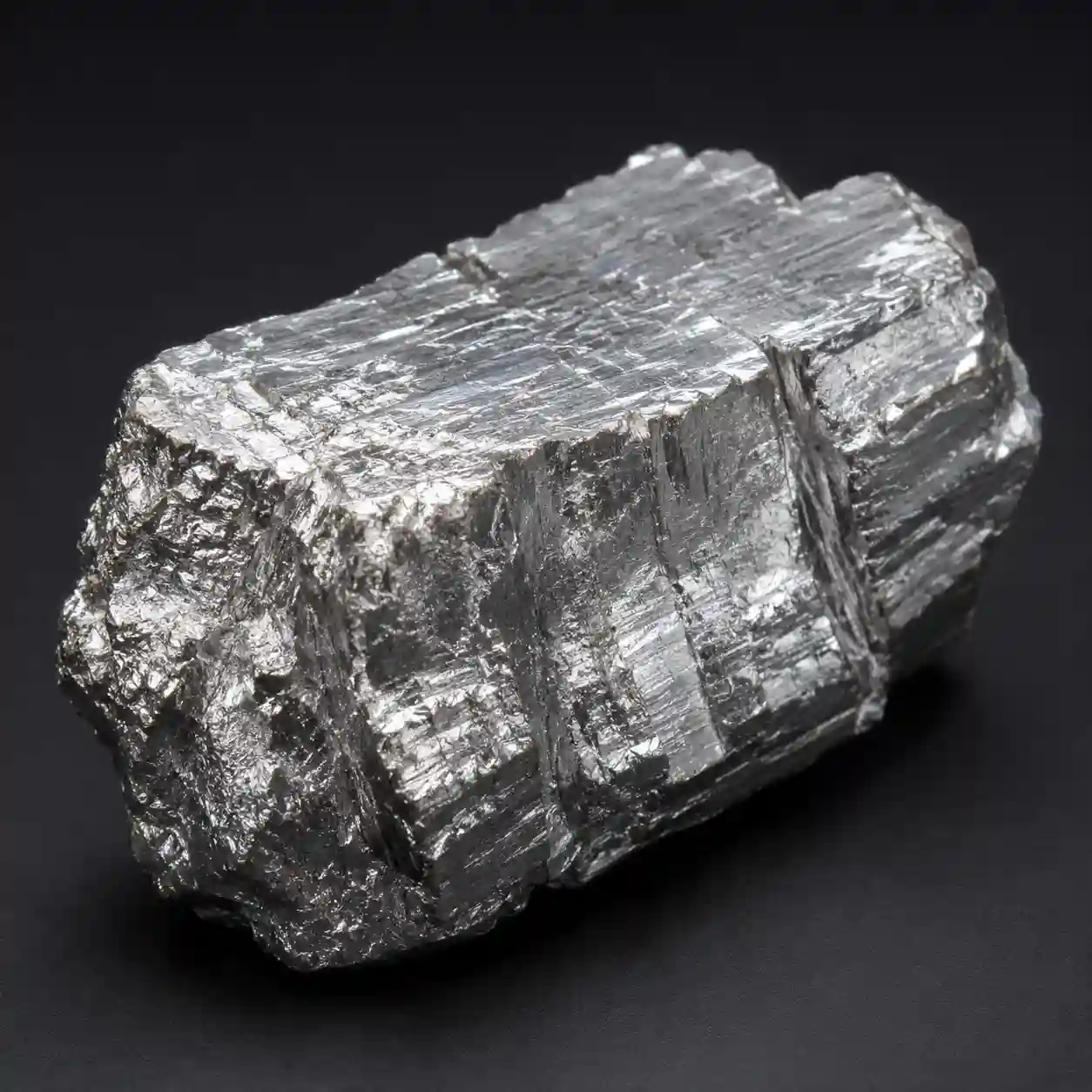 12Mg
12MgMagnesium
Strongest stage: Processing / industrial supply
High
Magnesium exposure connects to lightweight alloys, industrial materials, and manufacturing inputs where processing scale can shape downstream availability.
Confidence: Medium · Last reviewed: June 2026
 74W
74WTungsten
Strongest stage: Mining / processing
High
Tungsten exposure is linked to hardness, high-temperature performance, defense-relevant materials, industrial tooling, and processing pathways.
Confidence: Medium · Last reviewed: June 2026
Where dependency forms
Country exposure becomes more important when multiple supply-chain stages concentrate in the same geography.
Upstream production
Raw material extraction can create exposure, but it is not always the highest-risk stage.
Intermediate processing
Processing converts raw inputs into usable industrial material. This is often where dependency becomes harder to route around.
Refining and upgrading
Refining determines purity, consistency, and industrial usability. Downstream buyers may depend on qualified material specifications.
Separation capacity
Separation is especially important where material groups must be isolated, purified, or prepared for specialized applications.
Downstream manufacturing
Material influence grows when processing capacity sits near large downstream manufacturing ecosystems.
Policy and export control
Policy exposure can change access even when material exists physically. Licensing, controls, and restrictions are part of the supply chain.
Source context
Supply and production context should be grounded in public source categories, reviewed assumptions, and documented confidence labels.

USGS
Production, reserves, import reliance, and mineral commodity summaries.

IEA
Energy transition demand, processing concentration, and critical minerals market context.

Government policy references
Export controls, licensing, industrial policy, and public policy signals.

Academic and industry references
Material properties, substitution constraints, industrial applications, and downstream dependency context.
Source categories are shown for transparency. Raw evidence, reviewer notes, and source-to-score reasoning are not exposed in the public preview.
Public preview boundary
This tab shows a public-safe modeled view. It does not expose private evidence, raw source notes, or source-to-score reasoning.
Public preview includes
- Stage-level exposure labels
- Material-by-stage matrix
- High-level dependency interpretation
- Confidence labels
- Last-reviewed dates
- Source category context
- Modeled intelligence disclaimers
- Selected strategic material notes
Briefing / Pro includes
- Full evidence context
- Source-linked claims
- Trade-flow detail
- Company-level exposure
- Asset and facility exposure
- Customer-specific supplier notes
- Scenario analysis
- Exportable country brief
Modeled intelligence scores. Not official government ratings. Public-safe intelligence only.